




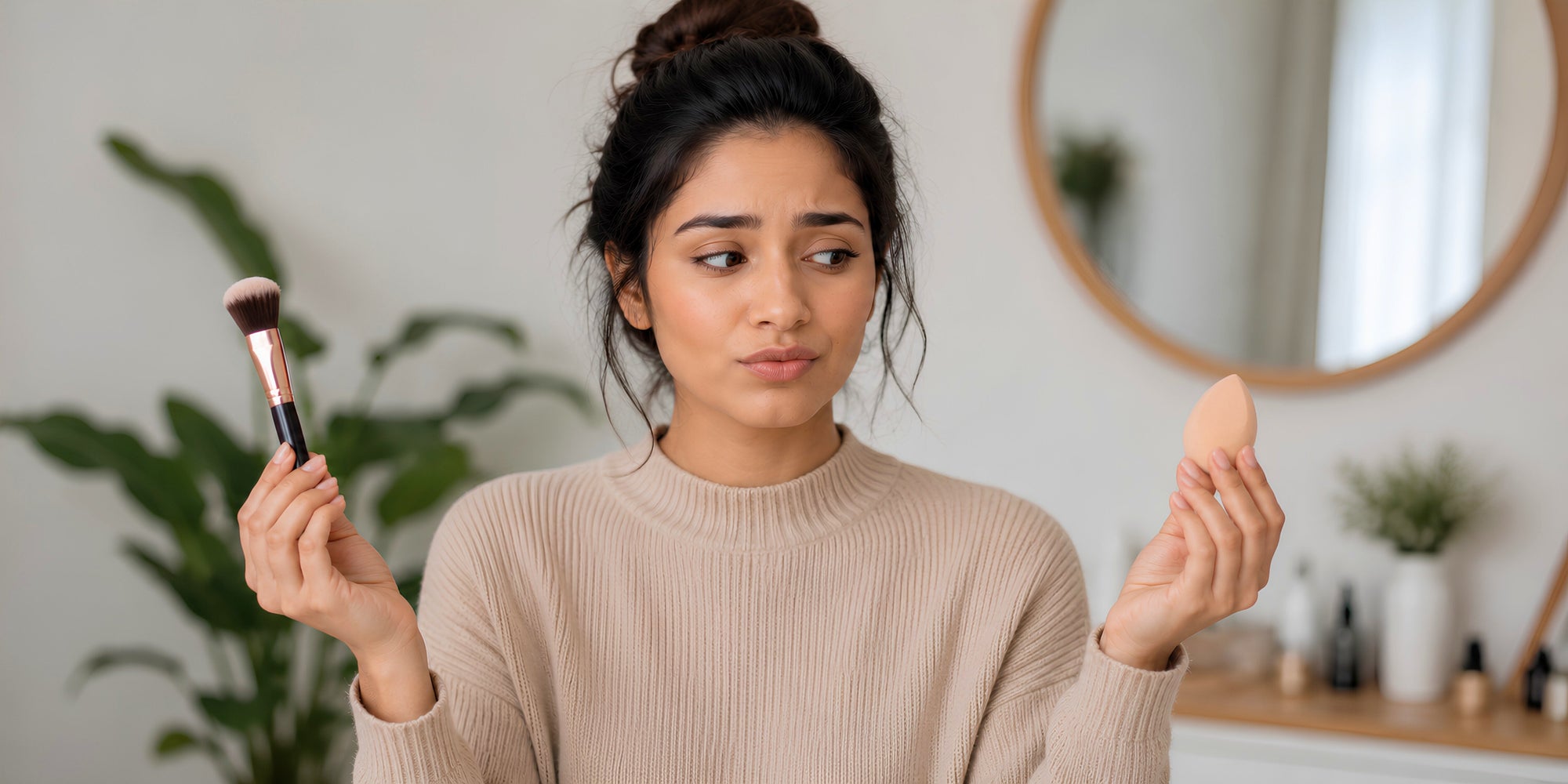
3 Factors you must consider before choosing your foundation tool
The right foundation tool can make a significant difference in your makeup results. At TrendTree, we believe that a flawless finish depends not only on your foundation but also on the tool used to apply it. Using the wrong tool can lead to uneven blending, product wastage, and visible streaks. A well-suited brush or sponge helps foundation apply more smoothly and naturally. Choosing the right makeup tool can enhance your overall look and boost your confidence throughout the day.
When to Use a Brush for Foundation Application
- When you want precise coverage - A brush will provide more precision and control when you need to target specific areas of your face, such as the eyes or blemishes.
- If you have an uneven skin texture - A brush can help to create a smoother finish by polishing your makeup evenly on your skin.
- When your foundation is creamy or sticky - When your foundation is creamy or sticky, a brush is often the best tool for blending the product as it will help warm and melt the formula into your skin.
- For professional or special occasion makeup - Most professional makeup artists opt for a brush as it allows for precise application and blending.
When to Use a Sponge for Foundation Application
- If you want a natural, no-makeup finish - If you desire a light, natural finish that looks like second skin, a damp sponge will help you achieve this no-makeup look.
- Sensitive skin - A brush might be too harsh when you have sensitive skin, in such scenarios a soft sponge will be a better option.
- For Quick, everyday makeup - When you’re running out of time or if you desire a quick everyday makeup look, a sponge can be a faster foundation tool as it allows for rapid, all-over coverage.
3 Factors on Which Your Choice of Foundation Tool Depends
- Your Desired Finish - Your desired finish is a very important factor to be considered in your choice of a foundation tool. For instance, a soft-bristled foundation brush can give you a natural finish.
- Personal Preference - Your personal preference affects how you apply, feel, and interact with your foundation.
- Skin type Consideration - If your skin is prone to acne, a foundation brush with antimicrobial properties might be a better choice.
Certain protocols need to be put in place if you want your foundation tool to give you your desired finish.
If you don’t carry out these functions you might end up underutilizing the efficacy of your foundation.
5 things to do to get the most out of your chosen foundation tool
Cleanse and Prepare Your Skin:
Cleansing your skin will help create a smooth canvas for your foundation and ensure it applies evenly.
Choose the Right Foundation Shade:
Select a foundation shade that matches your skin tone. Test the foundation on your jawline to find the perfect match.
Use the Right Brush or Tool:
Choose a foundation brush or tool that suits your skin type and foundation formula. For example, a beauty blender is great for liquid foundation, while a flat brush is better for cream foundation.
Blend, Blend, Blend!:
Make sure to blend your foundation well, especially around your hairline, jawline, and edges of your face.
Clean and Maintain Your Tool:
Wash your brushes with soap and water, and replace your beauty blender every 1-3 months.
If you’re looking for precision and control, a brush might be your best bet. For a natural, airbrushed look, a sponge could be your new BFF.
Still, having difficulty choosing the right tool for your foundation application?
Conclusion
Choosing the right foundation tool can make a noticeable difference in the way your makeup looks, feels, and lasts throughout the day. Whether you prefer the precision of a brush or the natural finish of a sponge, selecting a tool that complements your skin type and desired finish is key to achieving flawless results. At TrendTree, we believe that great makeup starts with the right techniques and tools. By pairing the right foundation tool with proper skincare and application methods, you can create a smooth, even, and confidence-boosting look every time.
Frequently Asked Questions
How do sleeping masks help with anti-aging? +
Sleeping masks help provide intense hydration, improve skin elasticity, support skin firmness, and reduce the appearance of fine lines and wrinkles.
How often should I use a sleeping mask? +
Most sleeping masks can be used 2–3 times a week or as recommended based on your skin type and skincare routine.
Can sleeping masks help reduce fine lines and wrinkles? +
Yes, sleeping masks formulated with ingredients like Vitamin C, peptides, collagen, or retinol may help improve the appearance of fine lines and wrinkles over time.
Can sleeping masks improve skin elasticity? +
Yes, sleeping masks with nourishing and firming ingredients may help support skin elasticity and improve the skin’s overall appearance.
Why is nighttime skincare important for anti-aging? +
During sleep, the skin naturally repairs and regenerates itself. Nighttime skincare helps support this process with hydration and nourishment.
Why choose Trend Tree Sleeping Masks? +
Trend Tree Sleeping Masks are designed to help hydrate, nourish, and support healthier-looking skin overnight while promoting a smoother, brighter, and more youthful appearance.